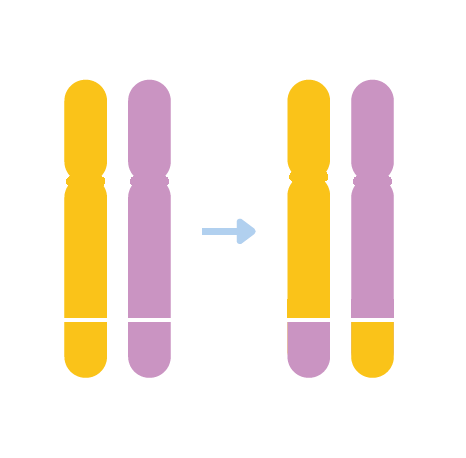
Balanced reciprocal translocation
Occurs when segments from two chromosomes break and exchange positions without net gain or loss of chromosomal material.

An advanced PGT solution designed for carriers of structural chromosome rearrangements.
A balanced structural rearrangement is a chromosomal alteration in which chromosomal segments are rearranged without an overall gain or loss of genetic material. Common forms include reciprocal translocations, Robertsonian translocations, inversions, insertions, deletions, and duplications.
Although carriers of balanced rearrangements are usually phenotypically normal, they are at increased risk of producing embryos with unbalanced chromosomal content, resulting in gain and/or loss of chromosomal segments.
Such imbalances may be associated with infertility, implantation failure, miscarriage, or the birth of a child with congenital anomalies, developmental delay, or intellectual disability.

Approximately 1 in 500 individuals carries a balanced chromosomal structural rearrangement.
Occurs when segments from two chromosomes break and exchange positions without net gain or loss of chromosomal material.
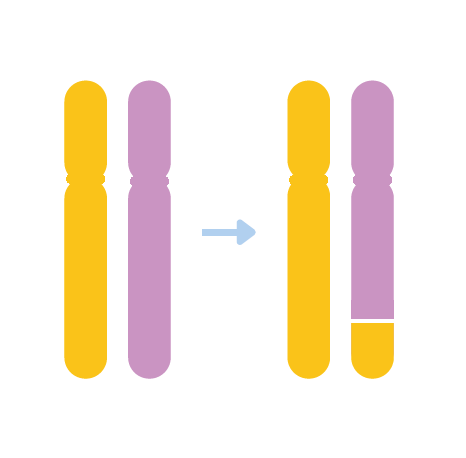
When chromosomal exchange results in extra or missing genetic material, the rearrangement is unbalanced and may have significant clinical consequences.
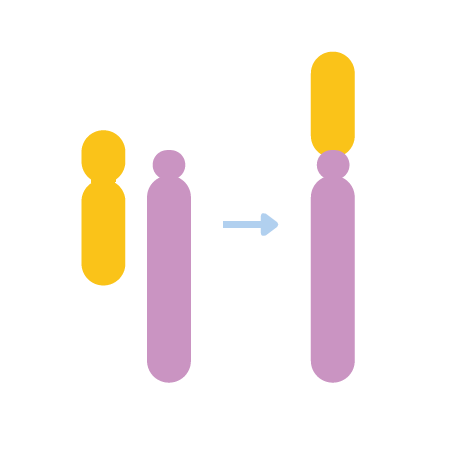
A specific type of rearrangement involving fusion of the long arms of two acrocentric chromosomes, typically chromosomes 13, 14, 15, 21, or 22. This may lead to gametes with unbalanced chromosomal content.
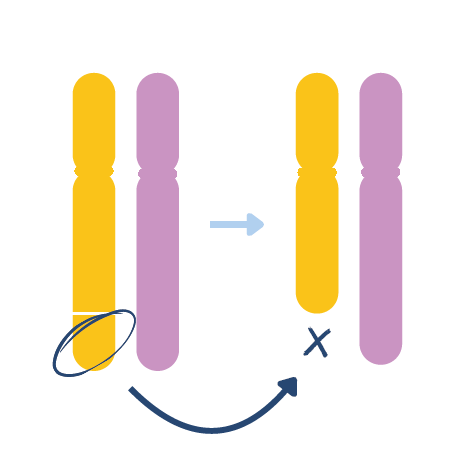
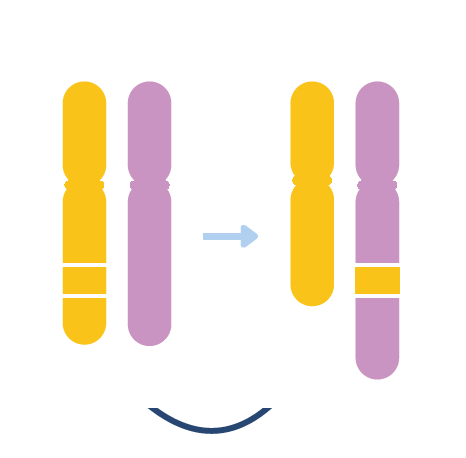
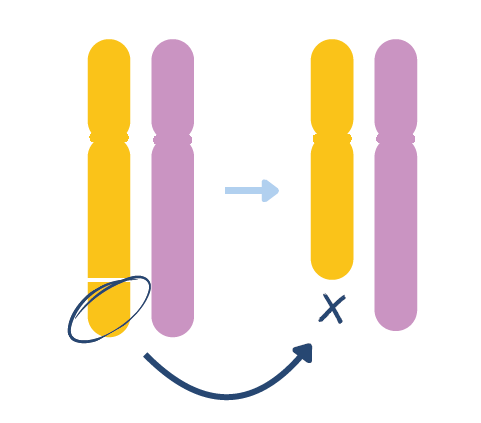
Loss of a chromosomal segment resulting from DNA breakage.
An insertion occurs when a fragment from one chromosome is inserted into another chromosomal location.
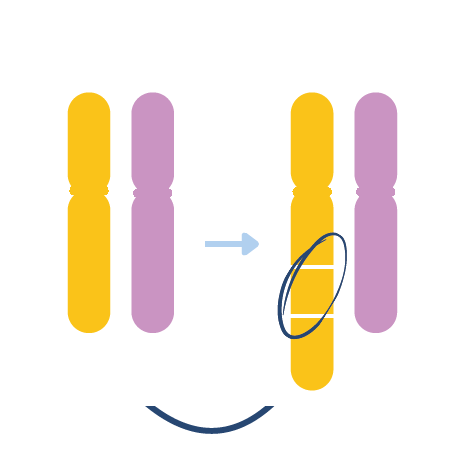
Gain of an additional copy of a chromosomal segment.
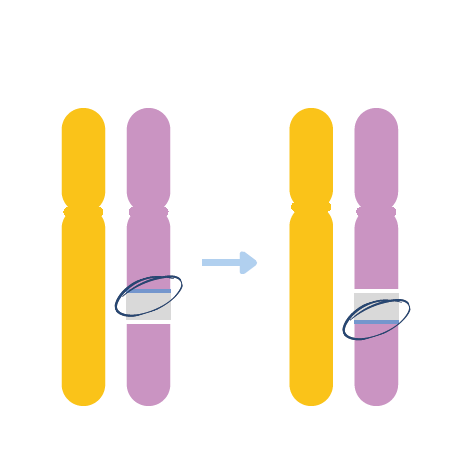
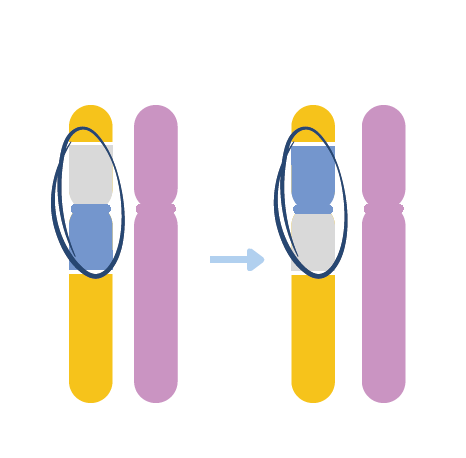
Occurs when a chromosomal segment breaks in two places, rotates, and reinserts in the opposite orientation. During meiosis, inversions may give rise to gametes carrying duplicated and/or deleted chromosomal regions.
Inversions may be classified as paracentric inversions, when the inverted segment does not include the centromere, and pericentric inversions, when the inverted segment includes the centromere.
Preimplantation Genetic Testing for Structural Rearrangements (PGT-SR) is a genetic test performed on embryo biopsy samples to identify chromosomal imbalances deriving from a structural rearrangement present in one of the parents.
Free from the parental rearrangement or carrying the same balanced rearrangement present in the parent.
With gain and/or loss of chromosomal material deriving from the parental rearrangement.
PGT-SR enables the identification and selection of embryos free from chromosomal imbalance, thereby contributing to improve reproductive outcomes and reducing the risk of miscarriage, as well as pregnancies or live births affected by severe chromosomal abnormalities.
PGT-SR can be applied across a broad range of structural chromosomal rearrangements, including:
PGTADVANCE-SR is GENOMICA’s advanced PGT-SR platform, developed for couples in which one or both partners carry a structural chromosome rearrangement.
The assay analyzes embryos generated through IVF to distinguish embryos that are normal or balanced for the parental rearrangement from those with unbalanced chromosomal content, thereby reducing the risk of miscarriage and chromosomally abnormal pregnancy.
PGTADVANCE-SR is performed using next-generation sequencing (NGS) combined with SNP-based analysis, enabling a dual-assessment strategy that provides greater robustness than copy-number analysis alone and supports more informed embryo transfer decisions.
In addition to detecting imbalances associated with the parental rearrangement, PGTADVANCE-SR also includes assessment of aneuploidies, thereby incorporating the analytical scope of PGT-A into the PGT-SR workflow.

Accuracy for detecting chromosomal imbalances and aneuploidy.
Unlike conventional PGT-SR methods based primarily on DNA quantity assessment alone, PGTADVANCE-SR uses the proprietary Dual-Seq technology, which integrates two distinct analytical methods.
Next-generation sequencing (NGS) quantifies DNA across millions of genomic positions on each chromosome, enabling accurate estimation of chromosome copy number.
Assessment of thousands of single nucleotide polymorphisms (SNPs) through B-Allele Frequency (BAF) analysis provides an independent and complementary verification of quantitative copy-number data.
In addition to quantifying DNA copy number across the genome, PGTADVANCE-SR examines thousands of genomic loci at which the DNA sequence may vary between individuals — variations known as single nucleotide polymorphisms (SNPs). These variations provide an additional, independent layer of information that strengthens result interpretation.
Supported by advanced bioinformatic tools and machine-learning algorithms, this dual strategy delivers embryo chromosomal assessment with superior accuracy and reliability compared with conventional approaches based solely on quantitative copy-number analysis, increasing confidence in result interpretation and supporting more precise embryo selection.
Next-generation sequencing quantifies DNA across millions of genomic positions on each chromosome, enabling highly accurate estimation of chromosome copy number.
 Chromosome copy number
 Chromosome copy number
 Chromosome copy number
Thousands of SNP loci are analyzed in parallel to identify characteristic allele patterns that distinguish euploid, monosomic, trisomic, haploid, and triploid states — each displaying distinct SNP signatures.

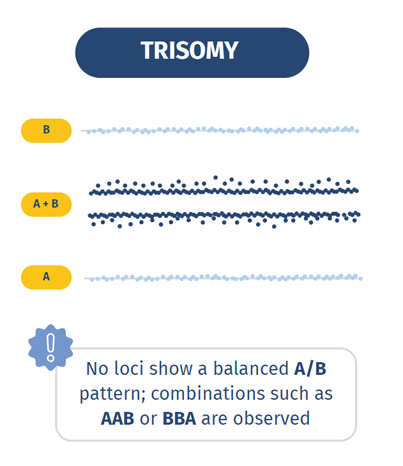
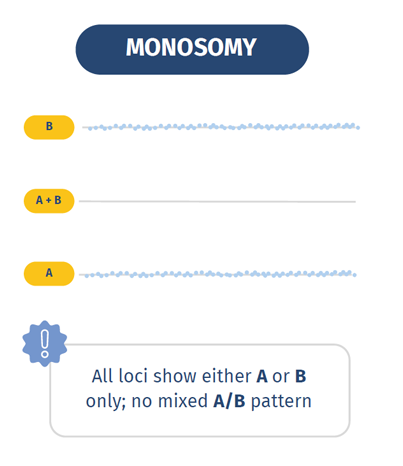
At each locus, the sequence may be represented by one of two possible forms, conventionally referred to as A or B. The allelic distribution follows characteristic patterns in different chromosomal states, enabling more accurate differentiation between euploid, trisomic, and monosomic embryos.

GENOMICA’s advanced in-house PGT-SR solution for highly accurate detection of chromosomal structural imbalances in IVF-derived embryos from carriers of balanced rearrangements.
Plus
GENOMICA’s most comprehensive PGT-SR workflow, expanding beyond standard PGT-SR to provide additional diagnostic and quality-control features to address more complex clinical scenarios.
Particularly suitable for detection of very small chromosomal imbalances (>1 Mb) resulting from a parental structural rearrangement.
Gain or loss of chromosomal segments resulting from a parental structural rearrangement.
PGTADVANCE-SR typically supports detection of structural imbalance >6 Mb.

Gain or loss of one or more entire chromosomes.

Gain or loss of a chromosomal segment.
PGTADVANCE-SR supports detection of segmental abnormalities typically >6 Mb.
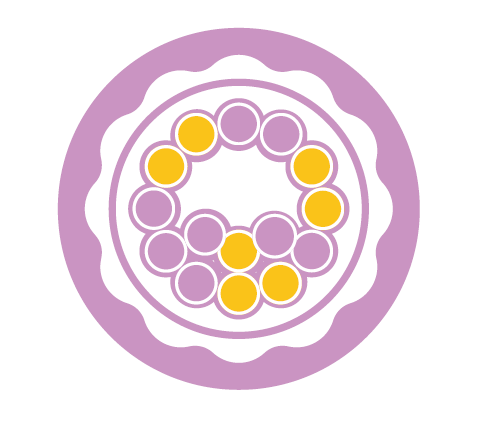
Presence of both chromosomally normal and abnormal cell lines within the same embryo biopsy sample.
Mosaic findings are associated with reduced implantation potential and increased miscarriage risk, although healthy live births from mosaic embryo transfer have been reported.
To further enhance the clinical performance of PGT-SR, GENOMICA has developed and validated a parallel SNP-based NGS strategy that complements conventional chromosome copy-number analysis and enables the identification of abnormalities not detected by standard workflows alone.
This integrated dual assessment strategy substantially expands the diagnostic reach of embryo testing and forms the foundation of PGTADVANCE-SR Plus.
| Feature | PGTAdvance-SR | PGTAdvance-SR Plus |
|---|---|---|
| Core technology | NGS + SNP-based analysis | NGS + SNP-based analysis |
| Chromosomal structural imbalance detection | >6 Mb | >1 Mb |
| Whole-chromosome aneuploidy | ✓ | ✓ |
| Mosaicism detection | ✓ | ✓ |
| Segmental imbalance detection | >6 Mb | >1 Mb |
| Microdeletion/microduplication syndromes | — | ✓ |
| Ploidy detection (haploidy / triploidy) | — | ✓ |
| Uniparental disomy | — | ✓ |
| Genetic PN Check | — | ✓ |
| Origin of aneuploidy assessment | — | ✓* |
| Cohort check (embryo sibling QC) | — | ✓ |
| DNA fingerprinting | Optional* | Optional* |
| Accuracy | ~99% | ~99% |
* Requires parental samples.
PGTADVANCE-SR is indicated for any couple in which one or both members carry a balanced structural rearrangement and wish to reduce the risk of transferring an embryo with an unbalanced chromosomal profile. Main types of rearrangement that can be analyzed:
PlusPGTADVANCE-SR Plus is especially recommended in the following clinical contexts:
NGS and SNP integration delivers highly reliable assessment of embryo chromosomal status.
Orthogonal copy-number and SNP-based data provide more robust interpretation than traditional methods.
Advanced analytics minimize over-calling and unnecessary exclusion of viable embryos.
Supports prioritization of embryos with the highest reproductive potential.
Facilitates SET, reducing the risk of multiple pregnancy and associated complications.
Prevents transfer of embryos with chromosomal abnormalities associated with pregnancy loss.
Improved embryo prioritization reduces the number of transfers and IVF cycles required to achieve a successful pregnancy.
PGTADVANCE-SR Plus adds ploidy analysis, contamination screening, PN check, cohort QC, microdeletion / microduplication syndrome detection, UPD assessment, origin of aneuploidy and DNA fingerprinting.
Genetic documentation, including the karyotype report, is received and assessed for technical feasibility by the PGT specialist team.
The IVF clinic initiates ovarian stimulation and fertilization according to its clinical protocols. Embryos are generated, and trophectoderm biopsy samples are collected at the blastocyst stage.
Biopsy samples are transported to GENOMICA under validated shipping conditions.
Embryonic DNA is analyzed using the PGTAdvance-SR assay to detect unbalanced structural chromosomal rearrangements and associated chromosomal abnormalities. A formal genetic report is issued to the referring IVF team.
Embryos classified as normal or balanced are considered eligible for transfer according to the clinical treatment plan.
Download the information brochure dedicated to PGTAdvance-SR to explore chromosomal structural rearrangements, Dual-Seq technology, available testing options and clinical indications.
Fill in the form for a free consultation. One of our geneticists will contact you, with no obligation, to provide all the information you need about the PGTADVANCE-SR test.