
PGT-M
Preimplantation Genetic Test ing for Monogenic Disorders
Supporting couples at increased genetic risk to achieve a healthy pregnancy.
WHAT IS PGT-M?
A preimplantation genetic test for monogenic disorders
Preimplantation Genetic Testing for Monogenic Disorders (PGT-M) enables the identification of embryos that are unaffected by a specific inherited disease in couples known to be carriers of a familial genetic condition.
This strategy has offered thousands of couples with increased genetic risk the possibility of undertaking a reproductive pathway with greater confidence, supporting the birth of healthy children without having to forgo pregnancy in advance or later face the difficult decision of therapeutic termination.
PGT-M can be applied to a wide range of inherited disorders, including:

fragile X syndrome
muscular dystrophy
Huntington disease
beta-thalassemia
numerous additional monogenic disorders
For couples who already have a child affected by a genetic condition whose treatment requires stem cell transplantation from an HLA-compatible donor, for example in cases such as beta-thalassemia, sickle cell disease, Fanconi anemia, and related disorders, PGT-M, when combined with HLA typing (Preimplantation HLA Matching), enables the identification of embryos that are both unaffected by the specific disease and HLA-compatible with the affected child.
When clinically indicated, PGT-M may also be combined with PGT-A (Preimplantation Genetic Testing for Aneuploidy), allowing simultaneous assessment of both the monogenic condition and the embryo’s chromosomal status from a single trophectoderm biopsy.
SUPPORTING COUPLES AT INCREASED GENETIC RISK IN ACHIEVING A HEALTHY PREGNANCY
Preclinical work-up and personalized procedure
PGTAdvance-M is GENOMICA’s advanced PGT-M service, developed for couples at increased genetic risk who are undergoing IVF.
Through molecular analysis of embryonic DNA, PGTAdvance-M enables the identification of embryos unaffected by a known familial monogenic disorder, significantly reducing the risk of a pregnancy affected by the specific genetic condition.
PGTAdvance-M can be applied to any genetic disorder for which the causative gene has been identified. Supported by a dedicated Research and Development Department, GENOMICA is able to design and optimize PGT-M diagnostic strategies across a wide spectrum of inherited conditions.
This development capability also extends to particularly complex cases and to rare genetic disorders for which no established diagnostic workflow is yet available. For each couple undergoing a PGT-M pathway, a fully personalized PGT strategy is designed and validated, specifically tailored to the genetic variants identified within the family. This preliminary phase of assay design and optimization, known as the preclinical work-up, is a critical step in ensuring the highest standards of analytical accuracy and diagnostic reliability throughout the diagnostic process.
A PERSONALIZED TEST FOR EVERY FAMILY
Family-specific design for high analytical precision
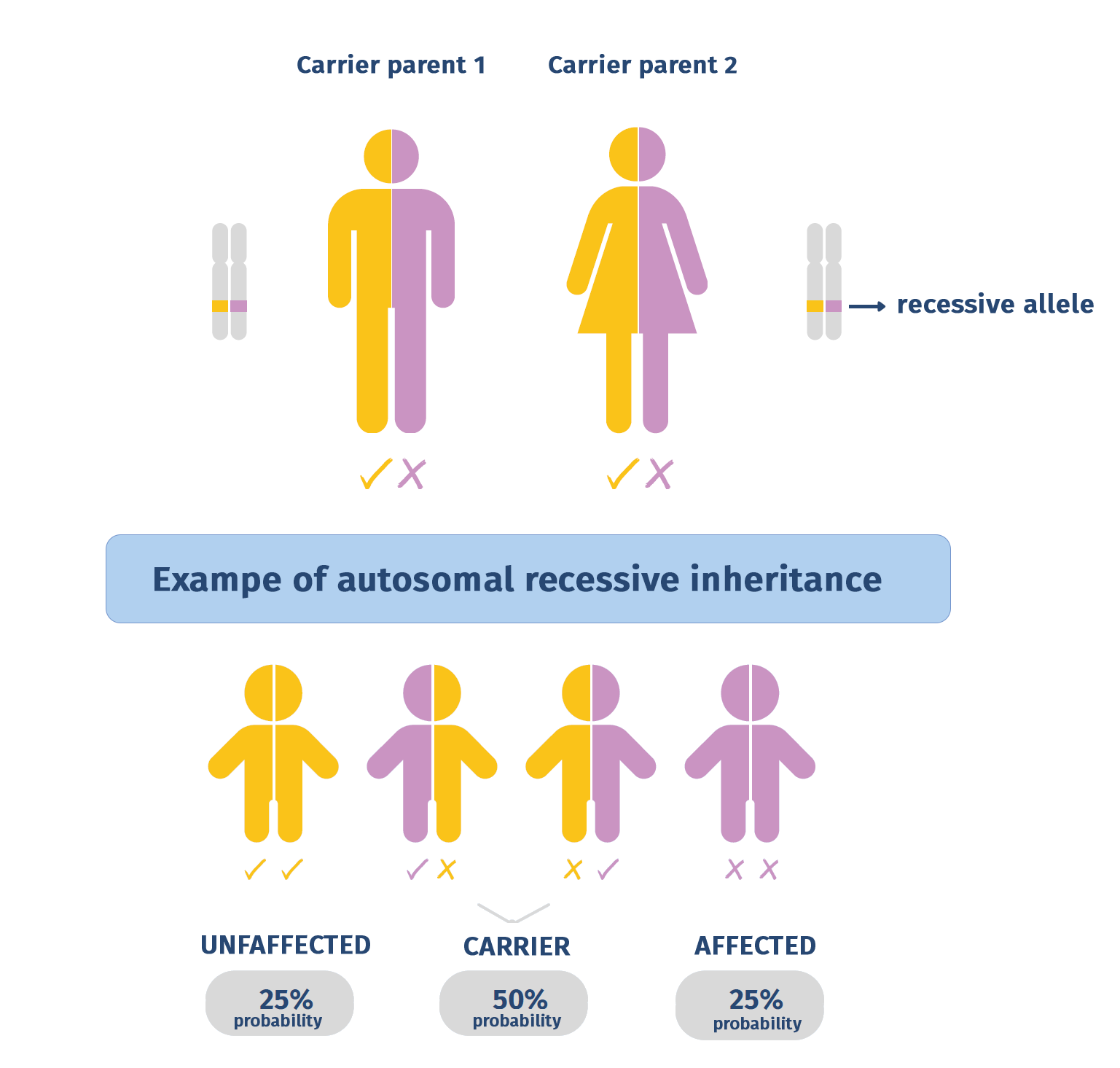
Monogenic disorders are caused by pathogenic variants located in a specific gene and are transmitted according to autosomal dominant, autosomal recessive or X-linked inheritance patterns.
Direct Analysis
Detection of the causative pathogenic variant(s) responsible for the familial condition.
Indirect Analysis
Evaluation of flanking chromosomal regions through linked genetic marker analysis (STRs/SNPs).
Haplotyping
Family-specific linkage analysis to strengthen embryo classification and ensure result robustness.
Classification
Accurate embryo classification as affected, unaffected, or carrier, per inheritance pattern.
In general, to define the genetic signature associated with the disease-causing allele, DNA samples are required from both reproductive partners and, where possible, from other family members. This approach enables accurate embryo classification that is clinically reliable and consistent with the inheritance pattern and specific clinical indication.
CLINICAL INDICATIONS
Who should consider PGTAdvance-M
PGTAdvance-M is indicated for patients undergoing an IVF pathway who have an increased risk of transmitting an inherited monogenic disorder to their offspring.
PGT-M can be offered when the causative pathogenic variant(s), or at minimum the relevant disease-causing gene, has been accurately identified and molecularly characterized through prior diagnostic testing.
STATE-OF-THE-ART TECHNOLOGY
Advanced diagnostic strategies for reliable embryo assessment
PGTADVANCE-M employs advanced molecular and bioinformatic methods to assess whether a preimplantation embryo is likely to be affected by a specific inherited disorder.
The approach combines direct mutation testing with indirect marker-based haplotyping to maximize diagnostic robustness and analytical confidence.
Distinctive features of PGTADVANCE-M
- Unlike other PGT-M strategies, the availability of samples from the couple’s relatives is not mandatory;
- Faster assay development and validation timelines;
- High analytical accuracy and diagnostic reliability;
- Possibility of simultaneously assessing multiple conditions, when clinically indicated;
- Possibility of HLA typing in selected cases;
- Enhanced robustness through case-specific assay design.
- Testing across a broad spectrum of inherited disorders.
GENOMICA offers PGT-M for the majority of monogenic disorders for which the causative variant has been identified.
ADVANCED AMPLIFICATION TECHNOLOGY
Improved DNA amplification for greater analytical confidence
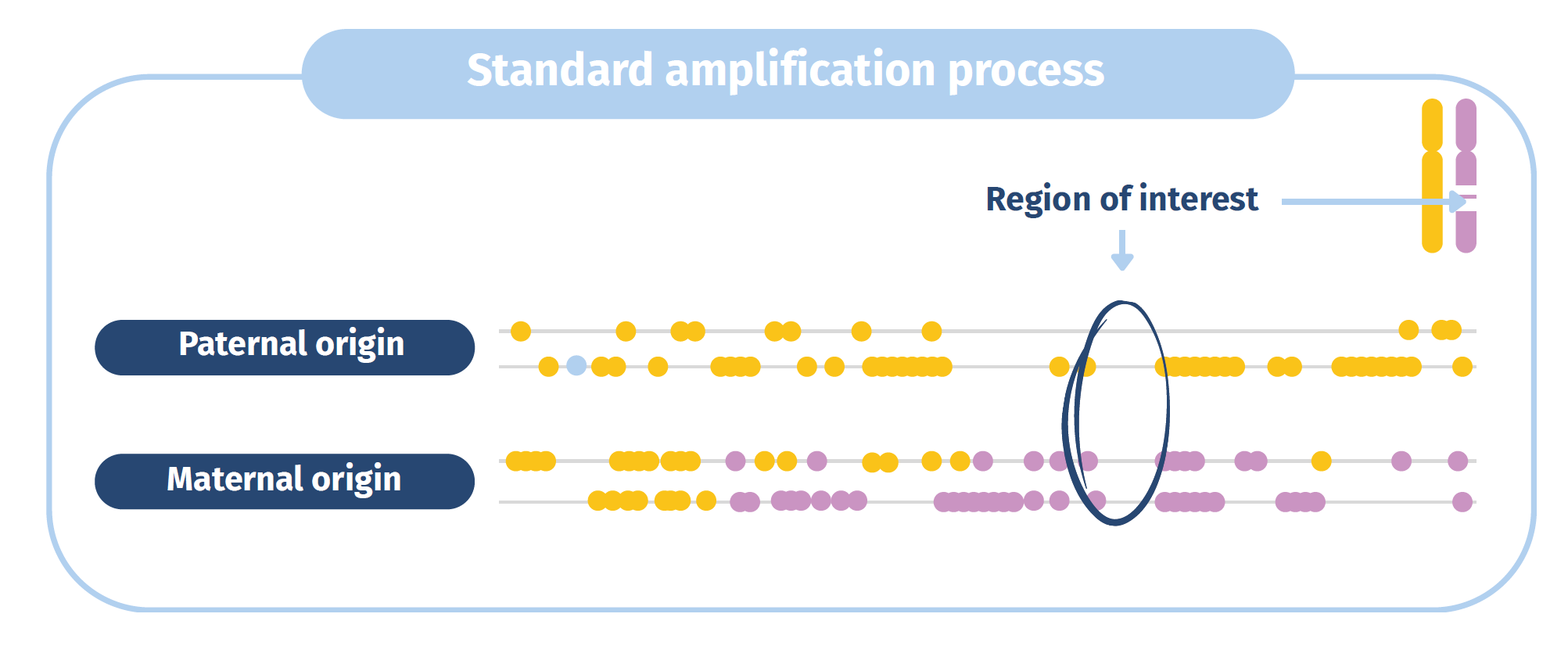
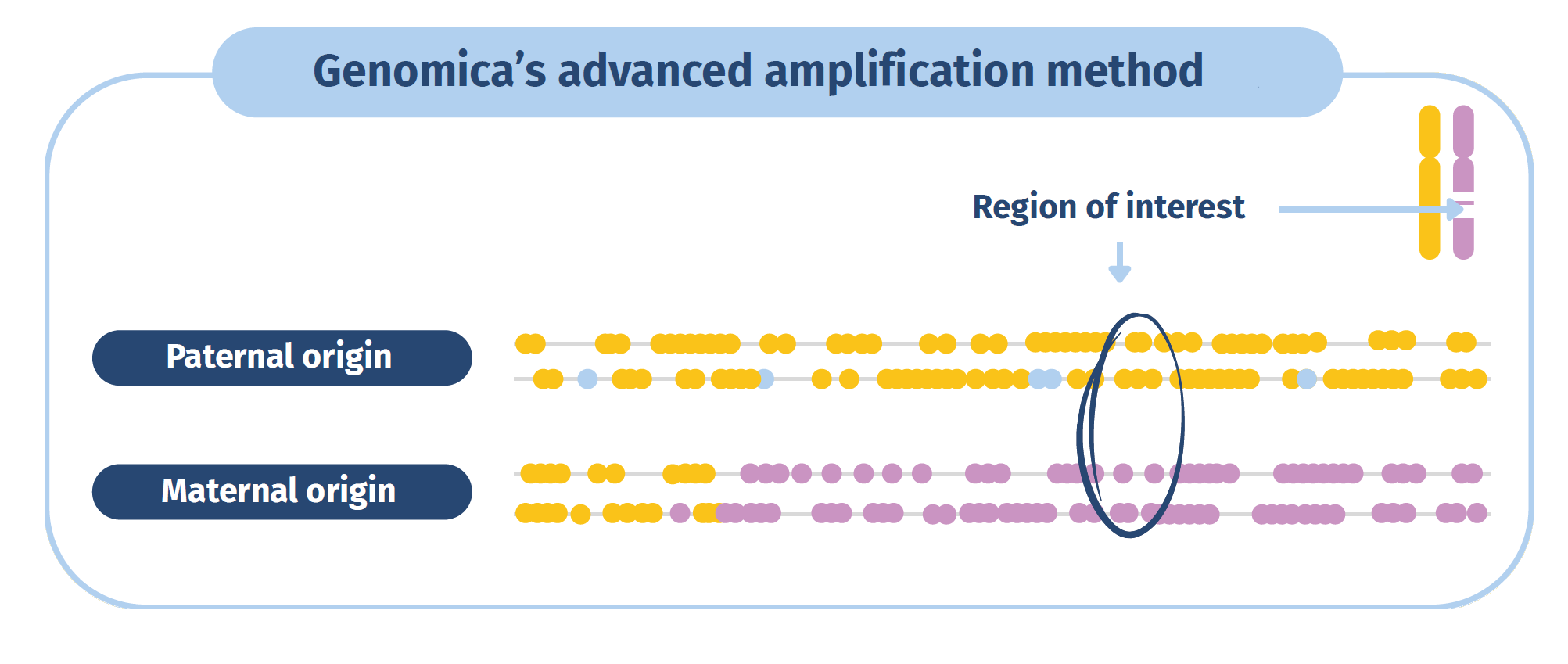
PGT-M is performed on limited quantities of genomic DNA obtained from embryo biopsy samples. Consequently, reliable and high-fidelity DNA amplification represents a critical determinant of assay performance.
GENOMICA employs advanced amplification methods specifically designed to maximize replication fidelity and minimize amplification-related artefacts inherent to single-cell or low-input DNA analysis.
By improving the quality and uniformity of amplified embryonic DNA, this approach enhances result interpretability and strengthens confidence in embryo classification. The result is a more robust analytical workflow and a higher level of confidence for both clinicians and patients.
WHY CHOOSE PGTAdvance-M?
Advanced genetic testing with direct clinical utility
PGTAdvance-M is designed to deliver a clinically robust and scientifically rigorous approach to monogenic disease testing in preimplantation embryos.
Substantially reduced risk of an affected pregnancy in couples at high risk of transmitting a specific inherited disorder.
Family-specific assay design, tailored to the established molecular diagnosis and inheritance pattern.
High analytical confidence through combined direct mutation detection and indirect haplotype-based testing.
Combined PGT-M and PGT-A testing capability from a single biopsy sample.
Broad clinical applicability across a wide spectrum of monogenic conditions.
Specialist genetic counseling support throughout the entire diagnostic pathway.
CLINICAL PATHWAY
How PGTAdvance-M works
Referral & case intake
Clinical and genetic documentation is received and reviewed, including prior molecular diagnostic reports and detailed family history information.
Specialist case review
The case is assessed for clinical suitability and technical feasibility by the PGT specialist team.
Genetic counseling consultation
Where appropriate, patients are offered dedicated genetic counseling to discuss the clinical indication, proposed testing strategy, and expected workflow timeline.
Case Acceptance & Testing Plan
A written testing plan is issued to the referring clinic, specifying any requirements relating to assay development and embryo sample submission.
Custom assay development
A family-specific PGT-M assay is designed and validated based on the identified pathogenic variant(s). A formal PGT-M work-up report is issued to the clinic, detailing the testing strategy.
IVF cycle & embryo biopsy
The IVF clinic initiates ovarian stimulation and fertilization according to its internal clinical protocols. Embryos are generated and trophectoderm biopsy samples are collected at the blastocyst stage.
Shipment of biopsied samples
Biopsy samples are transported to GENOMICA under validated shipping conditions.
PGT-M and results reporting
Embryonic DNA is analyzed using the custom PGT-M assay to determine the presence or absence of the specific familial pathogenic variant(s). A formal genetic report is issued to the referring IVF team.
Transfer planning
Embryos classified as unaffected are eligible for transfer in accordance with the clinical treatment plan.
Information material
PGTAdvance-M brochure
Download the information brochure dedicated to PGTAdvance-M to explore features, clinical indications, preclinical work-up and advanced diagnostic strategies.
Contact Genomica with no obligation
Request information about PGTAdvance-M
Fill out the form for a free consultation. One of our geneticists will contact you, with no obligation, to provide all the information you need about the PGTAdvance-M test.
Free consultation with a specialized geneticist
Reply within 24 working hours
Data processed in compliance with GDPR