WHAT IS PGT-A?
The purpose of PGT-A
Patients undergoing Assisted Reproductive Technology (ART) often present with a reproductive history characterized by repeated unsuccessful outcomes. These may include failure to achieve pregnancy, commonly associated with recurrent implantation failure after embryo transfer, as well as pregnancies that begin but end in miscarriage or, in some cases, are terminated following the prenatal diagnosis of a fetal chromosomal abnormality.
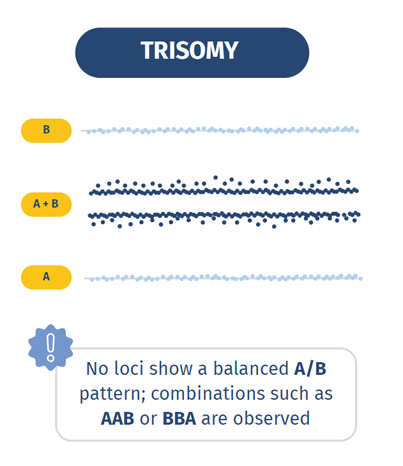
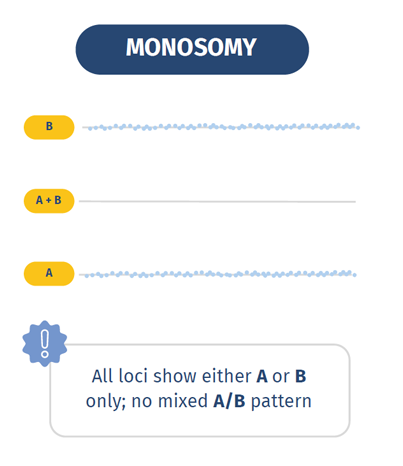
In a significant proportion of these cases, the reduced likelihood of achieving or carrying a pregnancy to term is associated with the presence of numerical chromosomal abnormalities in the embryos, known as aneuploidies.
Within this context, Preimplantation Genetic Testing for Aneuploidy (PGT-A) represents an advanced diagnostic approach aimed at identifying chromosomal abnormalities in embryos prior to uterine transfer, with the goal of improving the success rates of assisted reproduction treatments, particularly in patients with reduced reproductive prognosis.
With PGT-A, embryo selection is not based solely on morphological assessment, but also incorporates evaluation of chromosomal status, a key parameter closely linked to the embryo’s potential to result in an ongoing pregnancy. By identifying euploid embryos, namely those without detectable aneuploidies, PGT-A enables more accurate embryo selection and contributes to improved outcomes in assisted reproduction.